
The true value of communication is trust
Authentic communication has perhaps never been as important as it is today. In an environment where thousands of pieces of information constantly compete for our attention, and the noise is often louder than the facts, gaining trust is becoming increasingly difficult, while losing it is becoming easier than ever.
Companies, therefore, can no longer focus solely on how to become more visible. They must also find answers to how they can maintain their credibility and build lasting relationships with their employees, customers, partners, and the public at large.
Visibility alone is not enough
For a long time, digital communication was primarily about reach, impression counts, and capturing attention. However, greater visibility does not necessarily mean greater trust.
An organization can be constantly present in the public eye, yet its messages may not be perceived as credible. The true value of communication is therefore not measured merely by how many people it reaches, but by how much the stakeholders believe the organization and how consistent they perceive its words and actions to be.
What happens when trust is shaken?
When trust is shaken, the problem rarely remains purely a matter of communication. It can impact customer relationships, employee engagement, business partnerships, and ultimately, the company's performance.
Reputation is therefore not just an elusive, "soft" value. It is increasingly a business asset whose status and changes are measurable, and which must be managed as consciously as revenue, market share, or other corporate metrics.
Artificial intelligence is creating new rules
The development of artificial intelligence is fundamentally changing content creation, information retrieval, and public communication. It has never been easier to produce content quickly, in large volumes, and in a professional format.
However, this also creates new risks. As it becomes increasingly difficult to determine where content comes from, who created it, and what intent lies behind it, the credibility of the source becomes more valuable.
In the age of AI, those who produce the most content or capture the most attention will not necessarily be the most successful. In the long run, those who are present as recognizable, consistent, and reliable players will have the advantage.
Trust is one of the most important currencies of the 21st century
The winners of the future will not necessarily be those who communicate the loudest. They will be those who can build lasting trust through the alignment of their words and actions.
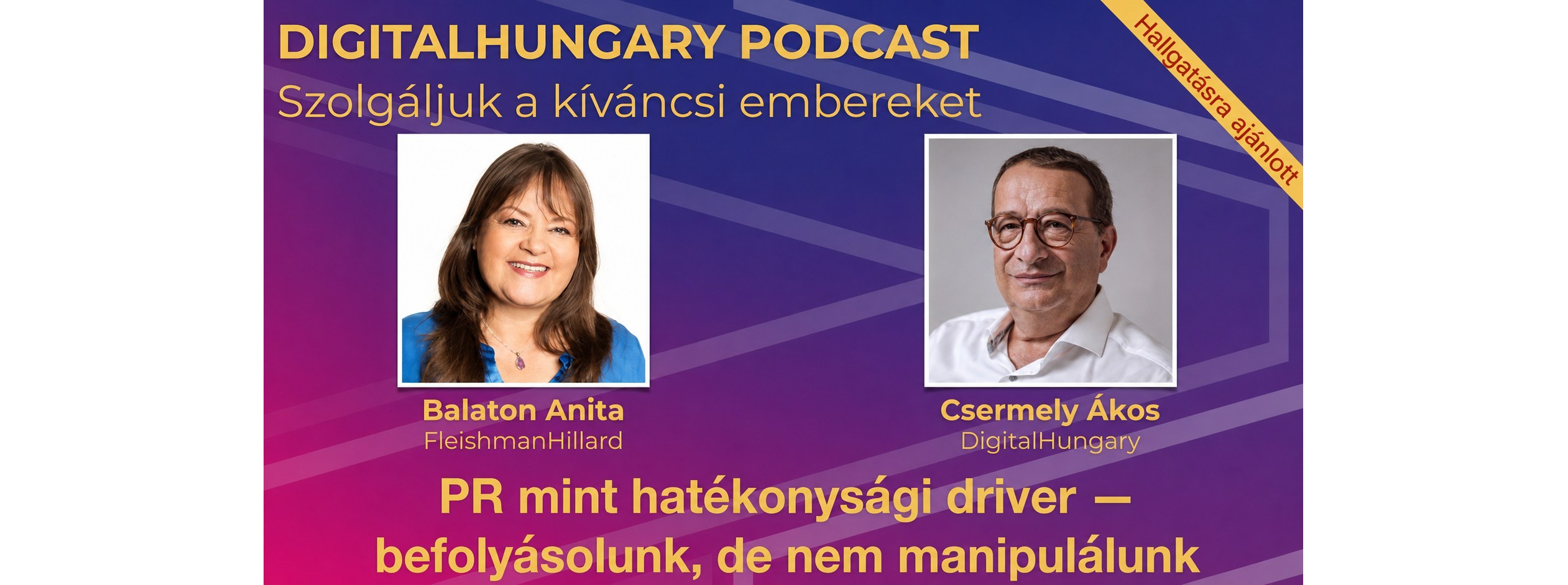
We recommend the Digital Hungary! Magazine podcast episode featuring Anita Balaton to anyone who wants to better understand why trust has become one of the most important business and social values of the 21st century.
Listen to the full conversation!
